
A dog dragging their bottom across the floor is usually trying to relieve discomfort. Scooting can happen because something is itchy, sore or irritating the area. It does not automatically mean worms, and repeated scooting should not be dismissed as a funny habit.
What can cause scooting?
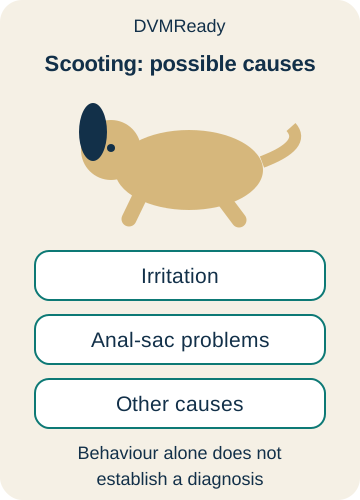
Possible causes include stool or other material caught around the bottom, irritated skin, parasites and problems with the anal sacs. These small sacs sit beside the anus and contain a strong-smelling secretion. When they become blocked, a dog may scoot, lick the area or seem uncomfortable passing stool.
An examination helps distinguish these possibilities. The same behaviour can have different causes, so treatment should not be chosen from the scooting alone.
When should I call the vet?
Arrange an appointment if scooting repeats, your dog keeps licking the area, or there is no obvious minor cause.
Contact the clinic urgently if you see a painful swelling, a wound beside the anus, blood or discharge, or your dog seems unwell. An anal-sac abscess can cause these signs, along with reduced appetite or low energy, and needs prompt treatment. A swelling that bursts is not a reason to assume the problem has resolved.
What can I do safely at home?
If your dog is comfortable being approached, look under the tail without squeezing or probing. A small amount of stool stuck on the surrounding fur may come away with gentle bathing. Stop and call your vet if it does not come off easily, your dog is painful, or you notice swelling.
Do not try to empty a painful anal sac yourself. Incorrect squeezing can injure the area. Routine emptying is not necessary for every dog, and recurrent problems deserve an individual plan rather than automatically adding gland expression to every grooming visit.
Could it still be worms?
Yes. Tapeworm segments can irritate the area, but scooting also occurs without tapeworms. If you notice small moving segments on stool or near the anus, tell your veterinarian. A routine stool examination does not reliably detect every tapeworm infection, so describe what you actually saw.
What information helps at the appointment?
Note when scooting began, how often it happens, any stool changes, recent grooming, and the names and dates of parasite treatments. Mention previous anal-sac problems and anything you have already applied.
Bottom line: Repeated scooting is a reason to look for discomfort, not simply to stop the behaviour. A painful or swollen bottom needs prompt veterinary attention.
General education for dog owners. This article cannot identify the cause of scooting or replace an examination.
Sources: PDSA scooting, blocked anal glands, anal-gland abscesses, and VCA tapeworms.
DVMReady provides independent educational support. Verify current examination, licensing, and clinical information with the relevant official source and professional references.
Official Sources
Check current guidance against the original sources.